
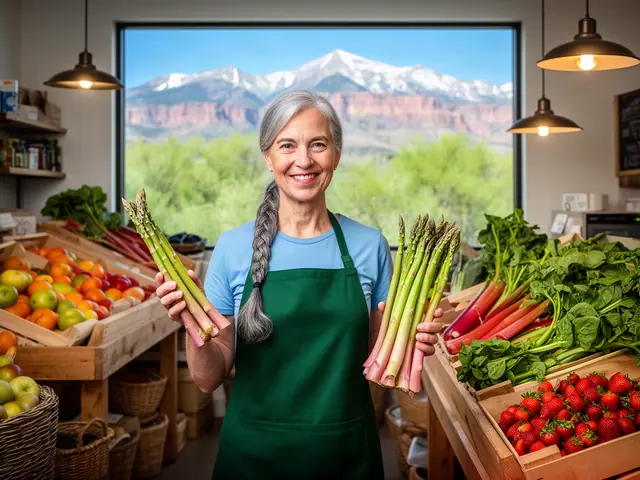
Grocery store loans help Loveland, Colorado grocers, meat markets and specialty food stores fund refrigeration, shelving, stock and purchases of existing stores. Larimer County, CO counted 51 grocery store employers in 2023. This page covers financing, buying a store, requirements, financial statements and checkout systems.
At a glance
- Grocery store employers, Larimer County, CO
51 (Census County Business Patterns 2023)
- Grocery store employees
2,789 (Census County Business Patterns 2023)
- Convenience store employers
16 (Census County Business Patterns 2023)
Grocery Store Financing Next to Larimer County, CO Grocer Counts
County Business Patterns counted 51 grocery store employers in Larimer County, CO in 2023, with 2,789 employees and $102.7 million in payroll; only 23.5% had fewer than five employees (Census County Business Patterns 2023). That grocery count includes 16 convenience stores, and the county also counted 78 gasoline stations. Nonemployer Statistics counted 54 grocery and convenience businesses without paid employees for 2024, in a code that also includes vending operators (Census Nonemployer Statistics 2024).
Those counts take in chain supermarkets as well as independents. Independent grocers, ethnic markets, butcher shops and natural food stores fund themselves differently: through their own deposits, supplier terms and outside funding for coolers and stock.
Refrigeration and Freezer Cases on an Equipment Loan
Illustration only, invented figures: a market replaces 8 refrigerated display cases at $9,800 each, $78,400 in all. Over 72 months at an invented 9.25% annual rate the payment is about $1,423 a month (our arithmetic). Remote refrigeration, with compressors on the roof, is partly built into the building and may be read as a build-out; self-contained cases are movable equipment.
Display cases can be bought or leased; the equipment financing page weighs the two.
Stock Financing for Fast-Turning Shelves
Grocery stock turns over quickly, which suits a revolving line drawn for each large order and paid down from sales, or inventory financing for a bulk buy. Perishables are hard for a funder to value as collateral, so financing tends to rest on shelf-stable goods and on the store's deposits rather than on the produce case.
How to Buy a Grocery Store: Stock Counts, Leases and Supplier Accounts
Illustration only, invented figures: a buyer pays $450,000 for an independent grocery business, puts in $90,000 and finances the rest over 120 months at an invented 9.5% annual rate, about $4,658 a month (our arithmetic). The price can be split into the business, the equipment and the stock on hand, counted at closing.
- A stock count at cost, taken close to the closing date.
- The seller's returns, sales reports and supplier statements.
- Whether supplier accounts and any distributor agreements transfer.
- The store lease and a signed landlord consent to its assignment.
- Licenses for food handling and any alcohol sales.
Grocery Store Financial Statements: Margins, Shrink and Turns
Illustration only, invented figures: a store with $2,400,000 in annual sales and $1,776,000 in cost of goods has a gross margin of 26% (our arithmetic). With $120,000 in stock on hand, it turns its inventory about 14.8 times a year (our arithmetic). Shrink, the stock lost to spoilage, damage and theft, comes straight out of that margin, so a partner may ask how the store tracks it.
The gross margin worksheet shows how to work out margin by department.
Grocery Store Business Loan Requirements for Meat Markets and Specialty Grocers
Specialty stores carry equipment a general grocer may not: meat saws, grinders, smokers, walk-in coolers, bakery ovens or bulk bins. A partner reads those stores the same way, through card deposits, margins and the lease, but values their equipment by its resale market, which is narrower for specialized items.
- Recent bank and card processing statements.
- Profit and loss statements with margin by department.
- The equipment quote or the purchase agreement.
- Health department inspection reports.
Point-of-Sale, Scales and Security Systems
Illustration only, invented figures: a $28,000 package of checkout lanes, scales and camera systems over 48 months at an invented 10.5% annual rate costs about $717 a month (our arithmetic). Point-of-sale data also helps the funding request itself, because it shows sales by day and department in a form a partner can read.
Walk-In Coolers and Back-Room Storage
Walk-in coolers and freezers in the back room are larger purchases than display cases and are partly built into the building. Illustration only, invented figures: a $46,000 walk-in cooler and freezer combination over 84 months at an invented 9.25% annual rate costs about $746 a month (our arithmetic). The landlord's consent and the lease term carry extra weight here, and a partner may ask for the refrigeration contractor's quote and a maintenance plan.
Supplier Terms Next to Outside Funding
Distributors may offer a grocer payment terms on each delivery, which is a form of financing with its own price, sometimes in the form of an early-payment discount given up. Comparing that cost with a line of credit's interest, in dollars, shows which is the better way to carry stock between delivery and sale.
By Rowanrun Business Loans · Updated